Most children are ready to start piano lessons between the ages of 5 and 7, when they can sit and focus for a short stretch, recognise letters and numbers, and move each finger on its own. Age is only a rough guide, though. A curious four-year-old may be ready sooner, and it is never too late to start: plenty of people begin at ten, fifteen or forty.
Below is a practical guide for parents in KL who are wondering whether now is the right time, and what to look for before booking a first lesson.
The short answer: around 5 to 7, depending on the child
Music teachers mostly agree that the early primary years are a comfortable time to begin formal piano lessons. By then most children have enough hand control to press one key at a time, enough attention to follow a teacher for a while, and enough reading to link a written note to a key on the piano.
That does not mean younger children should be kept away from music. Singing, clapping rhythms, dancing and playing around on a keyboard at home all build the listening skills that make lessons easier later. PBS KIDS for Parents makes the same point: informal music play works well for toddlers and preschoolers, and structured lessons suit children a little older.
At Master Artist, piano and instrument lessons are open from age 5 through to adult.
Five signs your child is ready for piano
Readiness says more than a birthday. If you can tick most of these, your child is probably ready to begin:
- They can focus for 15–20 minutes. They can stay with a puzzle, a picture book or a building game for that long without wandering off.
- They know their letters and can count. Piano notes are named A to G, and beginners count beats, so both skills get used from the first few weeks.
- Their fingers can work separately. Try asking your child to lift just their ring finger, or to tap each finger on the table in turn. It does not have to be neat, just possible.
- They can take simple instructions. "Put your right thumb on this key, then play the next three" should be something they can follow.
- They are interested. Your child hums along to songs, heads straight for any keyboard they see, or asks when they can learn. That spark will carry them through the harder weeks.
If a few of these are not there yet, waiting six months is no loss. A child who starts a little later but is truly ready often catches up quickly with one who started early and struggled.
Starting at 4, 8, 12 or as an adult
Under 5
Some four-year-olds do very well at the piano, but many find a structured lesson a stretch. If your child is younger than five and loves making things, a hands-on class such as children's art (Young Kids runs from age 4) can build focus and fine motor skills in the meantime, alongside plenty of singing and music at home.
Ages 8 to 12
Older beginners usually move faster at the start. They already read fluently, understand fractions (which helps with rhythm) and can practise on their own. Starting at nine or ten is common, and it is not a late start.
Teenagers and adults
Adults and teenagers can learn piano well. They bring patience, clear goals and the ability to understand why a technique matters. Master Artist offers Adult Voice & Piano as one-to-one lessons in soundproof rooms, so there is no need to learn alongside children.
What a beginner's piano lesson looks like
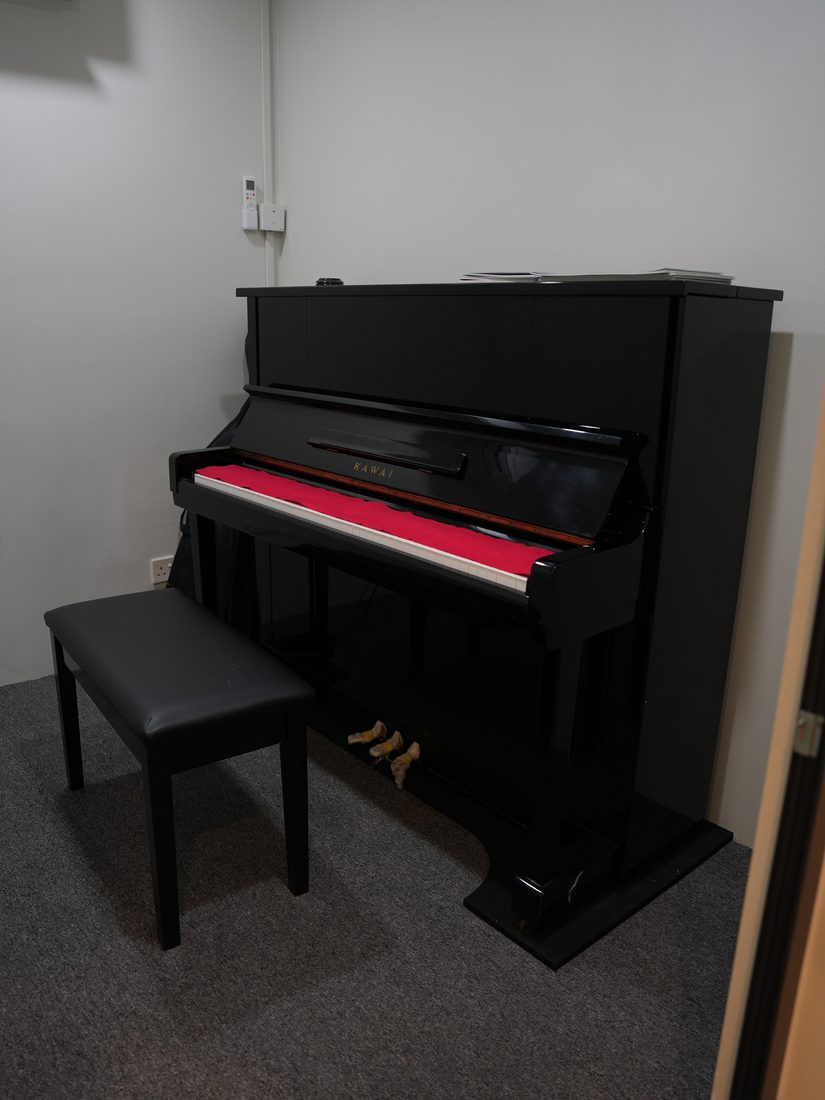
A good first term should feel like making music, not a test. At Master Artist, piano lessons are 60 minutes each week in a private soundproof room and follow three stages, so beginners are never overwhelmed:
- Beginner: note-reading, hand position and simple pieces, a gentle first introduction to the instrument.
- Intermediate: technique, sight-reading and musicality, with harder pieces as confidence grows.
- Advanced: performance-level pieces, deeper music theory and expression.
Lessons are paced to wherever each student is starting from, and there are no exams, by design. The focus is on real playing, creating and composing. We teach music to be loved, not feared.
Parents are welcome to stay and watch, which many families find reassuring in the first few weeks.
Do you need a piano at home before starting?
Not for the first lesson. A trial class is designed for complete beginners and everything needed is provided. If your child continues, we will let you know what is useful to have at home once you have enrolled, so you can hold off on buying an instrument until you know piano is the right fit.
Once lessons are under way, short and regular practice at home matters more than long sessions. For a young beginner, ten minutes most days does more than an hour on Sunday night.
Piano or singing first?
Some children are clearly drawn to the keys. Others are always singing. Both are good ways into music, and the ear training from one helps the other. If your child sings all day, voice lessons (also from age 5, one-to-one or with a friend in Group Voice) may be the more natural first step, with piano added later. If you are unsure, a trial lesson in each is a simple way to find out.
Frequently asked questions
Is 4 too young for piano lessons?
Not always, but many four-year-olds are not yet ready for a structured lesson. Look for the readiness signs above. Master Artist piano lessons start from age 5.
Is it too late to start piano at 10?
No. Older beginners often progress quickly because they read well and can practise independently. Many adults start from scratch too.
Does my child have to sit piano exams?
Not at Master Artist. Piano lessons here have no exams, by design. Students work through beginner, intermediate and advanced stages at their own pace.
How long is each lesson?
Piano and instrument lessons at Master Artist are 60 minutes, once a week, in a private soundproof room. The monthly fee covers four lessons.
Try a piano lesson for RM50
The easiest way to see whether your child is ready is to let them try. Book a RM50 trial class at our studio in Desa Sri Hartamas, a short drive from Mont Kiara. If you enrol, the RM50 is credited in full against your first month, so trying costs nothing. Complete beginners are welcome.